

Global humanitarian aid and refugee support
Displacement moves people faster than language support can follow.
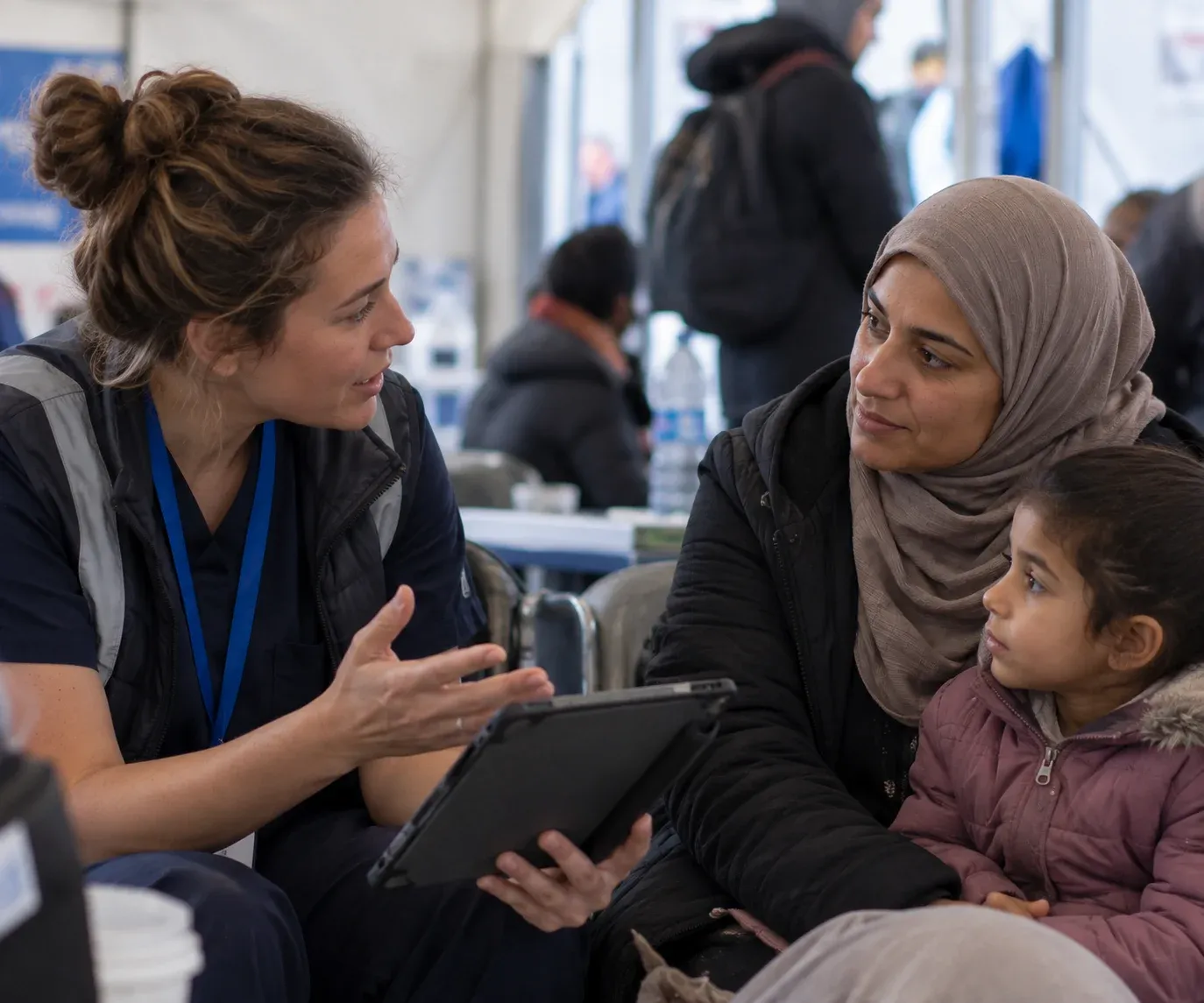
The situation
Humanitarian responders, refugee health services, NGOs and resettlement teams meet people who have travelled through several languages and lost their medical history on the way. Interpreter supply in the languages that matter is often thin, and the setting may have no reliable connectivity.
What that costs
- Communication depends on whichever volunteer or family member can improvise.
- Children are used as interpreters in conversations they should never carry.
- Clinical history, consent and safeguarding concerns are lost between organisations and locations.
How CardMedic fits
Responders get clinically authored content and accessible formats in the languages present in the camp, clinic or reception centre, with interpreter escalation where a service is available and offline access on supported platforms.
Three outcomes
- 01
Immediate reach
Structured communication at first contact, before any interpreter can be arranged.
- 02
Dignity
Adults are spoken to directly, not through their children.
- 03
Continuity
The same approved material across responders, clinics and onward services.
Take back control of the communication pathway
Your organisation – not a software vendor or a language-service provider – sets the approved communication options and the routing policy. CardMedic applies your rules and shows you what happened.