

Accessible clinical communication
Every patient, understood.
One platform for language, literacy, cognition, hearing and vision. Communicate clearly, choose the right support, and reach an interpreter when needed.

Trusted in frontline healthcare
Deployed widely across NHS acute, urgent, community and maternity care; independently evaluated; and used internationally. Built for any health system, with written content in 45 languages and accessible formats, and interpreter access in up to 200+ languages.





Independently recognised
All awards and listings- HSJ Partnership Awards Patient Safety finalist
- MassChallenge US Platinum winner
- Picker Experience Network Runner up, finalist twice
- Health Tech World Best Digital Health App
- Fast Company Most Innovative Companies
- PM's Points of Light Recipient
Why CardMedic exists
Built after seeing what failed at the bedside.
CardMedic began in 2020 after NHS Consultant Anaesthetist, Dr Rachael Grimaldi, read about a critically ill patient, frightened because he could not understand staff through PPE. Rachael and Tim Grimaldi built and launched the first version of CardMedic, 72 hours from concept.
The pandemic exposed that problem rather than creating it. People are excluded by language, literacy, cognition, hearing and vision every day, in every setting, and always have been. CardMedic has grown from that frontline insight into a clinically governed communication platform, built around the person rather than one provider or device.
Read our story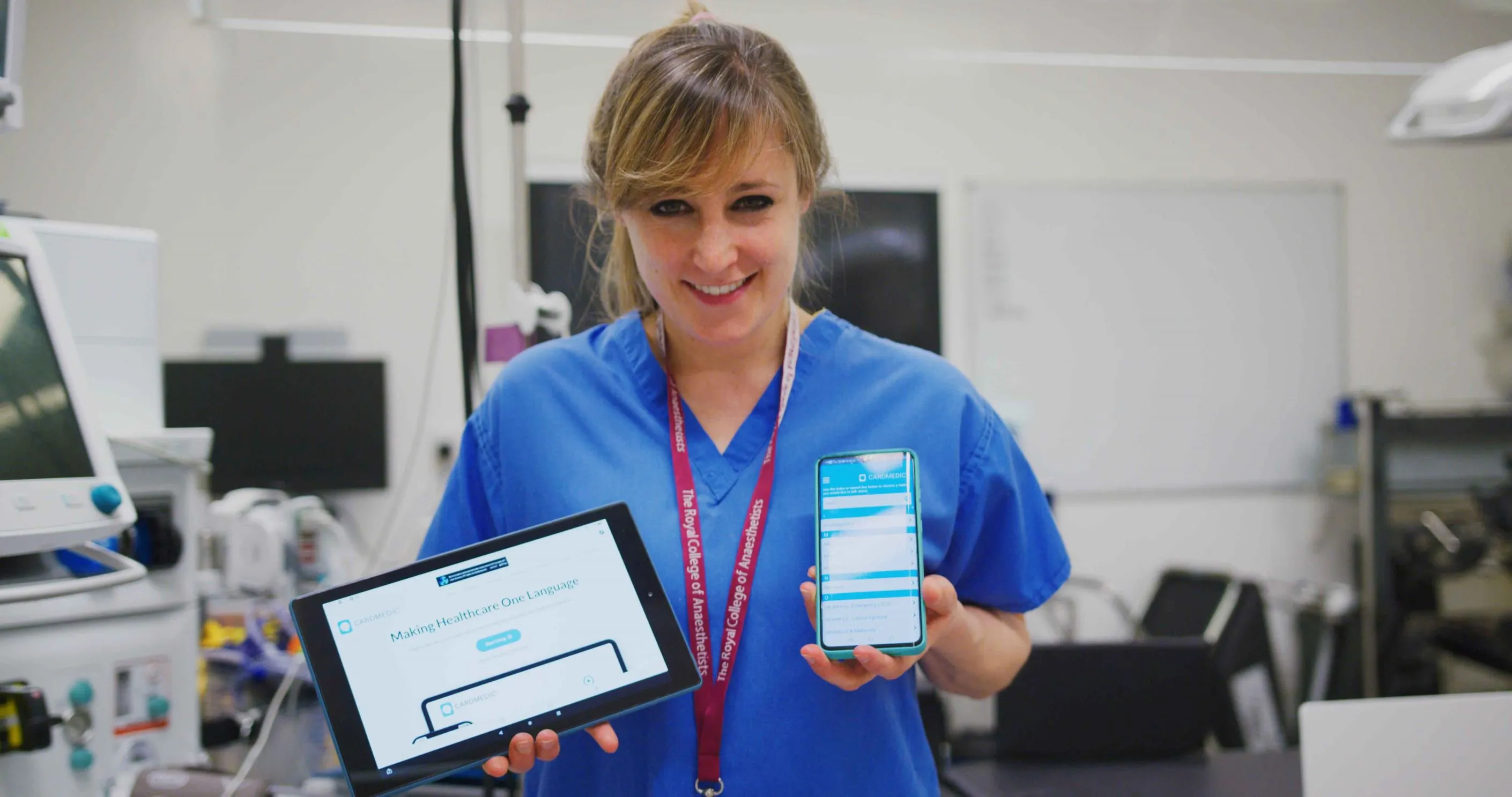
Communication support is fragmented. The patient experiences the gaps.
A patient’s needs rarely fit one channel. When content, translation, accessible formats and interpreter access live in four separate systems, the everyday conversations get missed.
-
Too little support for everyday care
Routine but important interactions happen before an interpreter is requested, or while teams wait.
-
Too many disconnected routes
Content, translation, accessible formats and interpreter access sit in different places.
-
Too little evidence of what worked
Leaders see interpreting spend, but not the pattern of need, access and escalation.
A barrier is not always language
Five different needs, five different answers. Speaking louder is not one of them.
- Different language Translated governed content
- Reading or literacy Easy Read and Read Aloud
- Cognition or memory Structured, one-concept prompts
- d/Deaf or hard of hearing Sign language and captions
- Low vision Read Aloud, large type, colour contrast
At the bedside, in the ambulance, at the front door
A nurse, a patient, a phone already in someone’s pocket. Wherever care happens, on shift or on a home visit, on any device, with a signal or without one.
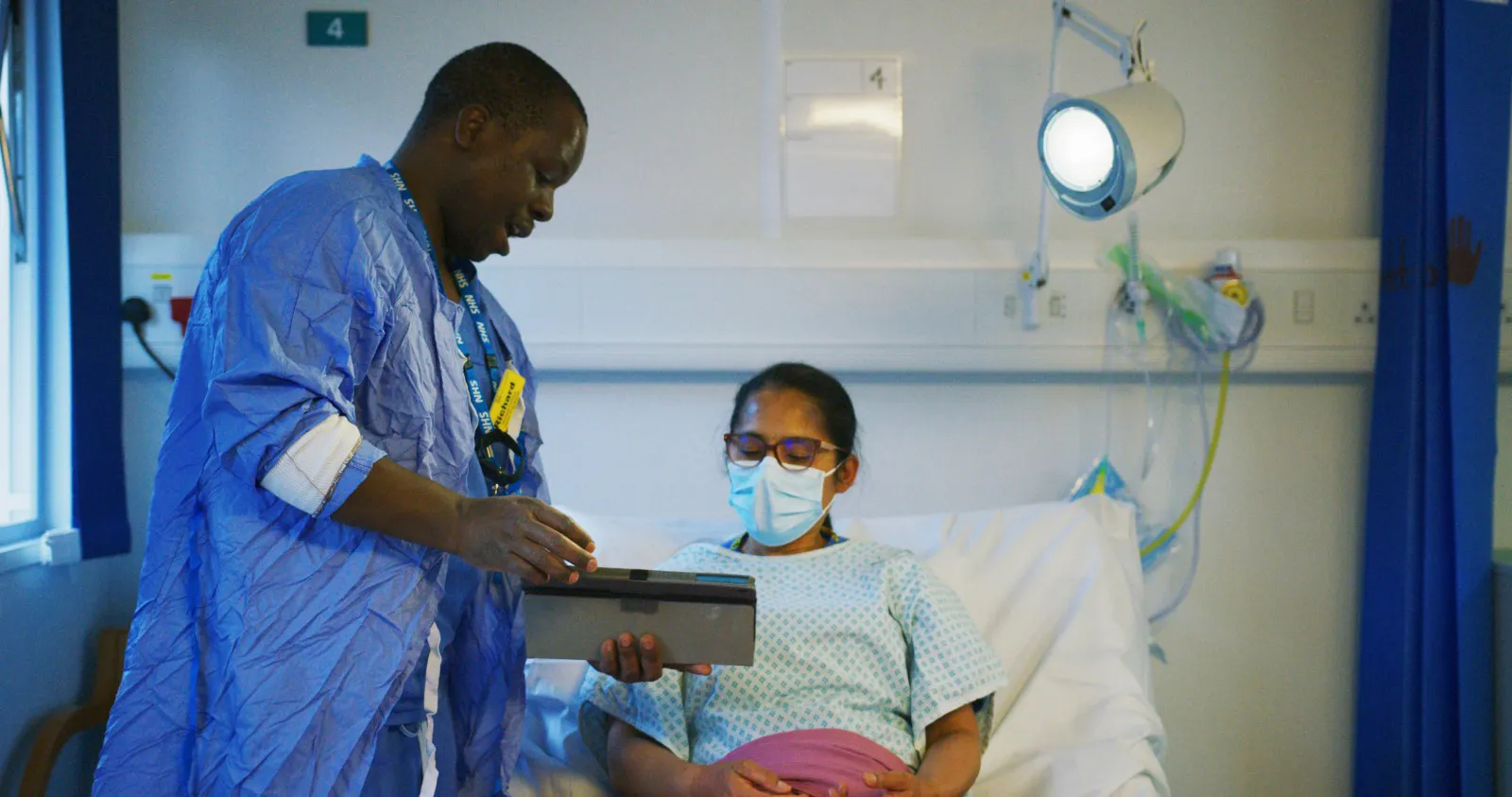
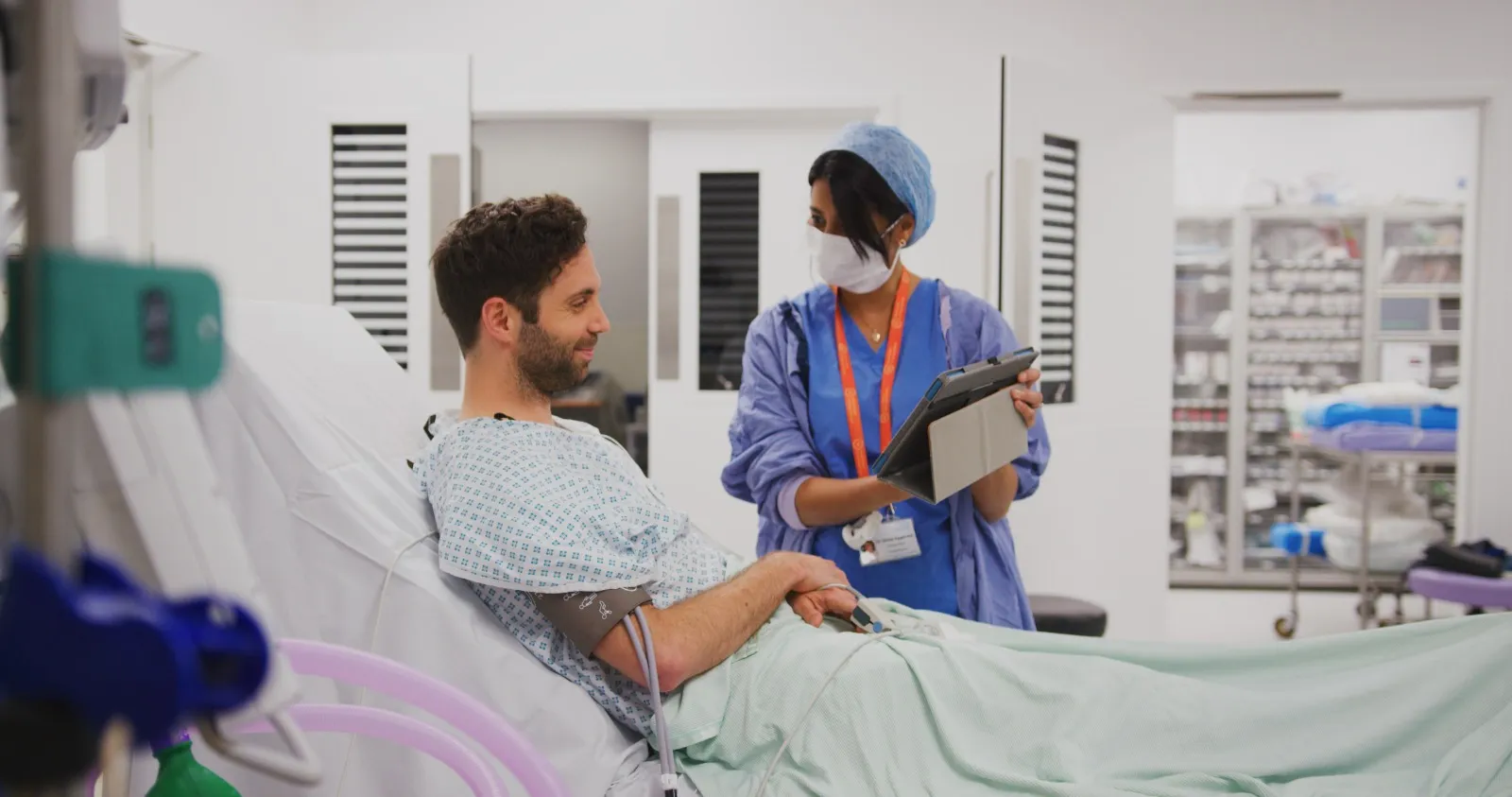
Understand the need. Choose the support. Communicate clearly.
Three governed routes. Which one you use depends on the person in front of you and the risk in the conversation.
-
Clinically assured content
Prepared healthcare conversations and patient information in multiple languages and accessible formats.
-
Live Translate
Live translation for appropriate open conversation, with safeguards and clear user control.
-
Professional interpreter access
Telephone or video access to the organisation’s approved providers, from the same workflow.
Professional interpreters remain essential. CardMedic makes them easier to reach when they are the right support.
It has to work the first time someone opens it.
- Search-first access to the right communication route
- Clinically authored and governed interactions
- Adoption, modality and escalation reporting
Evaluated evidence
Evidence from real clinical use.
In frontline use across the breadth of NHS care – acute, urgent, ambulance, maternity, inpatient, outpatient, community and primary care – and in health systems internationally. Supported through the NHS Innovation Accelerator and the NHS Clinical Entrepreneur Programme, with development and evaluation supported by SBRI Healthcare and Innovate UK grant funding, and assessed in independent NHS service evaluation and academic research. Every figure below is traceable to a named study, with its setting and sample stated.
How it was actually used
One NHS emergency department over a period of weeks – not our total activity. 854 active users, around nine conversations each. Surveyed staff said communication was faster; that is what they told us, not something we measured.
7,503Supported interactions recorded
- Prepared clinical content Short, everyday exchanges 6,199
- Live Translate Open, unplanned conversation 1,049
- Escalated to a professional interpreter Through the app, on top of booked interpreting 255
The interpreter figure is not a share of this Trust’s interpreting. Booked interpreting carried on alongside all of this and is not counted here – these 255 are escalations placed through the app, on top of it. The rest are largely the short, everyday exchanges that were previously handled in broken English, through a relative, or not at all. Escalation is preserved rather than suppressed. The organisational licence is fixed and independent of interpreter minutes. Route selection remains with the organisation and should follow the patient’s needs, the conversation and the risk.
- Acute to community NHS care settings using CardMedic Emergency care, ambulance, inpatient, maternity, outpatient, community and primary care
- 50%+ Reduction in blended cost per interaction Independent NHS evaluation, with improved and faster communication maintained across the same period
- p<0.001 Improvement in patient satisfaction US doctoral study – a result this strong would occur by chance less than once in a thousand times
How support reaches the patient
The right route depends on the person, the conversation and the risk – not on which contract covers it.
- Clinically governed content Prepared, reviewed conversations and patient information in multiple languages and accessible formats.
- Live Translate Live translation for an open conversation, with visible limits.
- Professional interpreter escalation Telephone or video access to an approved provider whenever the conversation needs human skill and judgement.
- Feedback, governance and measurement What was used, what was escalated, and what to improve next.
What we learn feeds back into the governed content, so the next conversation starts better.
Professional interpreter escalation is a first-class route, not a fallback. Exact modality counts are in the case study methodology.
Improve access. Build a case for in-year value.
Our organisational licence is fixed and linked to the organisation, not interpreter minutes. Any business case is built from your own activity and contract data – not a national average. Where partners or providers are involved, commercial arrangements are transparent and agreed separately.
Patient interactions
For a 9.6% increase in overall spend, in one Trust’s own modelling of its language-service costs alongside its CardMedic activity.
Trust modelling
Cost per interaction, where modelled
Across the organisations where we have run the numbers on their own activity and contract data, with interpreter calls placed in the app counted in. Existing language-service comparators sit around £26.
Trust modelling
Licence economics
A fixed organisational licence that does not rise with interpreter minutes.
commercial model
Validated with your data
Value ranges are built from your own activity and contract data, with assumptions shown.
business case
For the people who decide
What this answers, by role
Four people usually have to agree. Each needs a different answer.
- Chief Nurse Safe, compassionate communication at the bedside, with appropriate escalation to a professional interpreter.
- Patient Experience Confidence, inclusion and measurable experience across language, literacy, cognition, hearing and vision.
- CIO, Digital and IG Provider, device and modality agnostic, with the full dataset exportable to you – plus data protection and clinical governance evidence.
- Finance Director Avoidable cost, delay and repeat work, measured in-year against your own baseline rather than a national average.
Care settings
Where organisations start.
-
Hospitals and health systems
One communication standard across every site.
-
Urgent, emergency and ambulance
Speed and resilience when needs are unknown.
-
Ambulatory and outpatient care
Fewer repeated explanations across a fast pathway.
-
Private and international healthcare
Consistent multilingual experience across a group.

Clinical backing, evaluation and recognition
Built for NHS deployment
- Clinical governance and DCB0129 Clinician-founded, with clinical authorship, review ownership and a named Clinical Safety Officer.
- DTAC and procurement routes DTAC is an NHS assessment framework, not a certification: we hold and share the evidence it requires. Procurement route and framework details are confirmed in writing.
- UK GDPR and DPIA support A data-protection position and governance documentation we support, not an accreditation badge.
Programmes and evaluation support
-
 Programme NHS Innovation Accelerator CardMedic is listed in the NHS Innovation Accelerator innovation directory.
 -
 Programme NHS Clinical Entrepreneur Programme Our clinical founder is an alumna of the NHS Clinical Entrepreneur Programme, and has mentored other clinical and non-clinical founders.
 -
 Funded evaluation SBRI Healthcare Funding and evaluation support. SBRI Healthcare is funded by NHS England with the Health Innovation Network, which is not the same as NHS England endorsing what we say.
 -
 Award winner Digital Health Rewired Pitchfest Pitchfest winner, as reported by Chelsea and Westminster NHS Foundation Trust innovation charity, CW+.
 -
 Export support Department for Business & Trade CardMedic is part of the Department for Business & Trade Digital Health Export Offer Playbook, with an export success story published: CardMedic has been accessed in 163 markets.
The structural difference
Provider-neutral by design.
We are agnostic about provider, device and modality: connect the interpreting providers you already approve, add another, use ours, or none. You keep control of the pathway, and you get the whole dataset behind it – need, adoption, modality, escalation, response times – in full, exportable, and yours. Nothing opaque, and no reporting you have to ask our permission to see.
Not ready to route interpreter calls through us, because of an existing contract or the politics around it? That is a common answer and a reasonable one. Everything else works exactly as normal, and here is why one front door tends to raise access without raising spend.
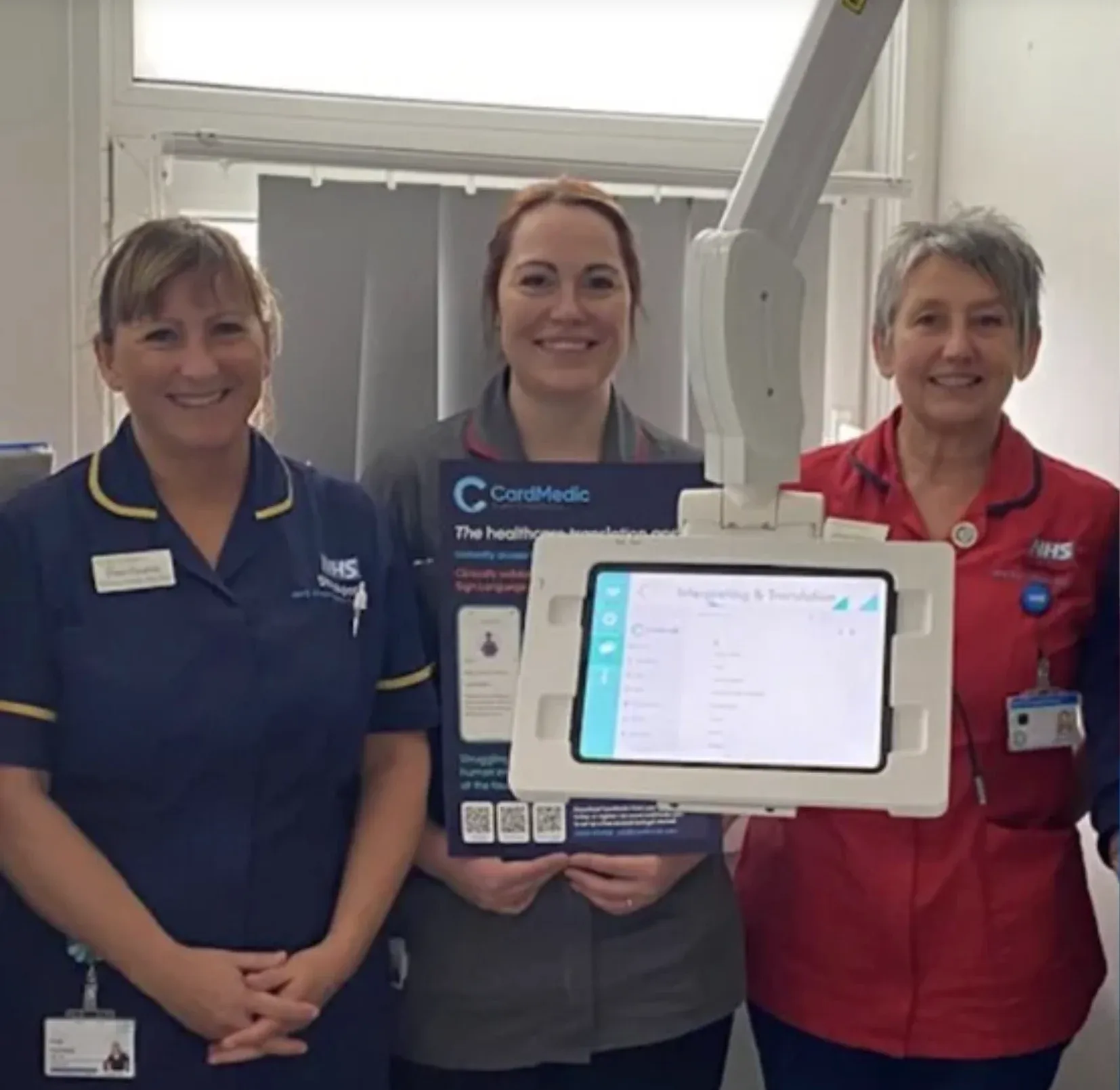
We turn up, and we stay
Software on its own does not change a conversation. We baseline the pathway with the teams who will use it, walk the floors, train in short practical sessions and track the benefits against what you agreed at the start.
What could a blended communication pathway change?
See where access may be limited, what a blended pathway could change and which local data would support a validated financial case.
See what accessible communication could look like across your organisation.
Licensed organisations sign in for immediate access. Eligible healthcare professionals can request a seven-day Evaluation Mode with a verified work email.