
Sign language in healthcare.
British Sign Language and American Sign Language are first languages, not accessibility add-ons. CardMedic gives clinical staff signed content, d/Deaf-aware communication and interpreter access inside the same governed platform they use for everything else.
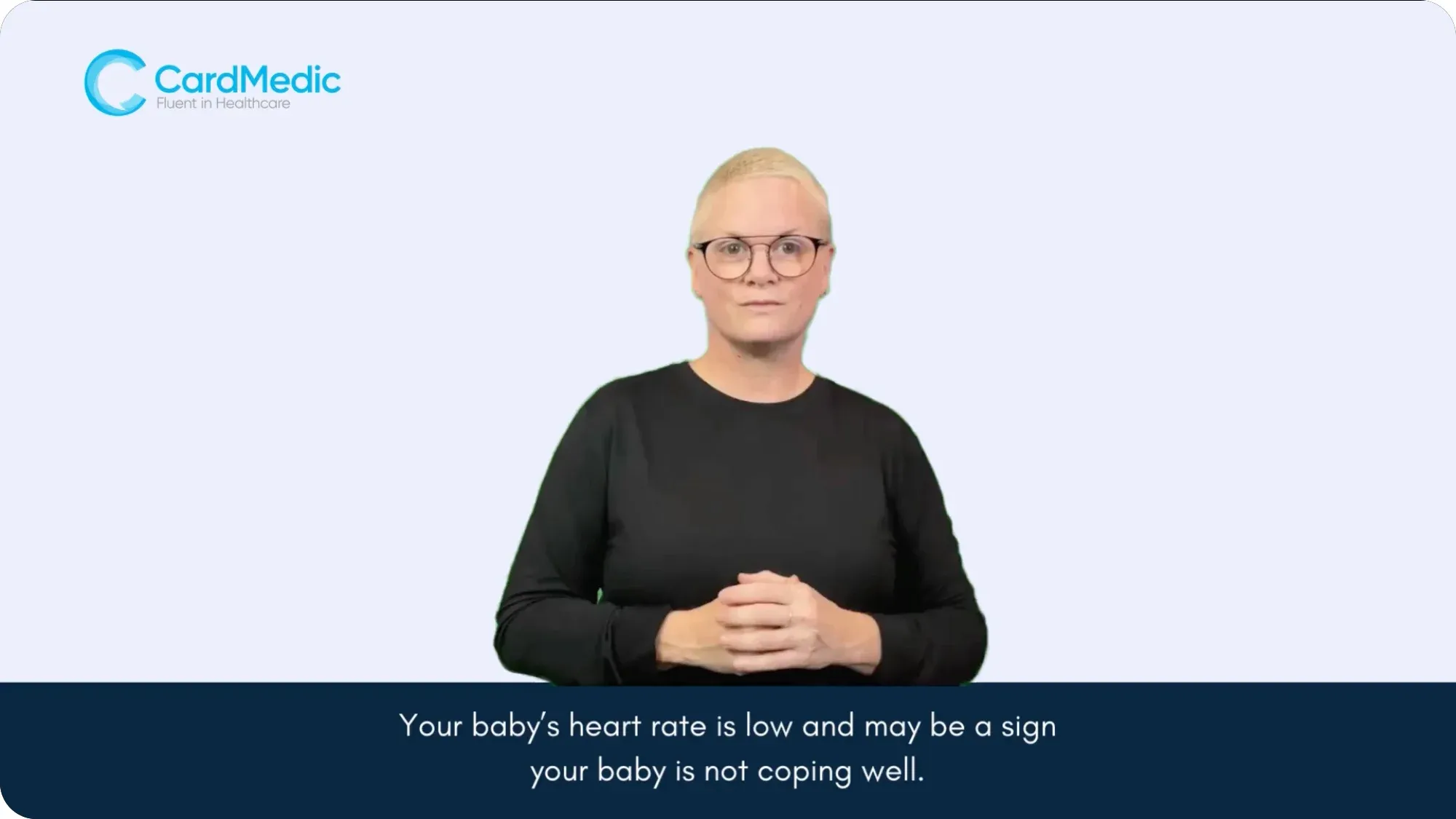
Signed clinical content, not captions on a video
Signed content is produced with d/Deaf communities and reviewed as part of the same clinical governance framework as every other format. It is not machine-generated, and it is not English subtitles pretending to be sign language. BSL for UK services, ASL for US health systems.
What healthcare staff can do with it
A nurse, paramedic or doctor with no signing ability can still open a clinically authored conversation in the patient’s own language on the device already in their hand.
- Switch any supported communication card into BSL or ASL
- Reach a registered sign language interpreter through your organisation’s approved provider
- Combine signed content with Easy Read, Read Aloud and large-type display for patients with more than one communication need
- Use it at the bedside, in an ambulance or in a community visit, including offline on supported platforms
When a sign language interpreter is the right answer
Signed content covers explanation, instruction and reassurance. It does not replace a registered interpreter for consent, safeguarding, complex history-taking, breaking bad news or any open-ended conversation. CardMedic makes that escalation one tap rather than a separate process – and we would rather say plainly where the limits are than imply there are none.
Why this matters clinically
d/Deaf patients experience measurably worse health outcomes, and a large part of that gap is communication that was never made accessible in the first place. Under the Accessible Information Standard, UK providers are required to identify, record and meet the communication needs of d/Deaf patients – not to improvise on the day.