About CardMedic
Built after seeing what failed at the bedside.
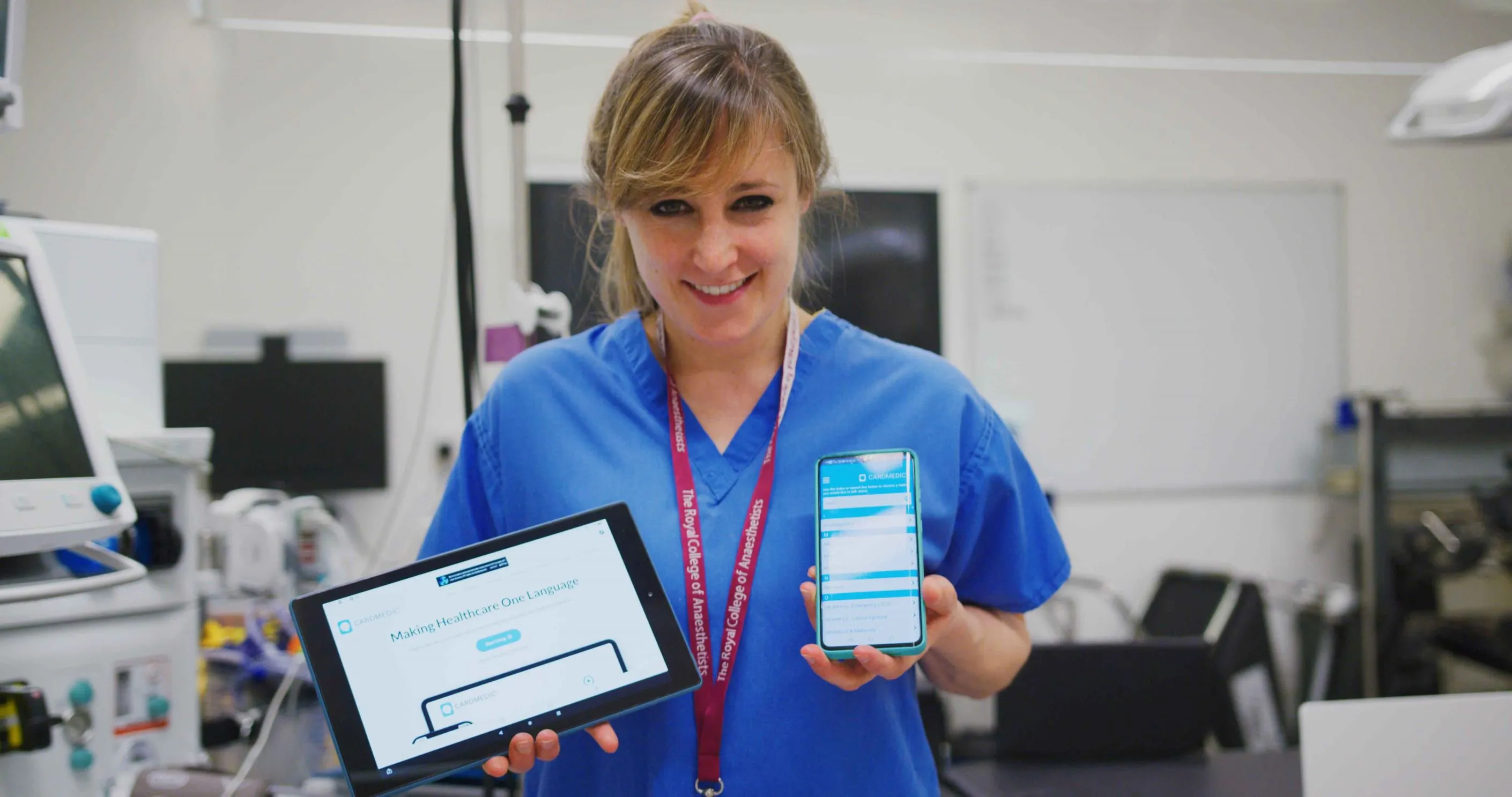
CardMedic began in 2020 after NHS Consultant Anaesthetist, Dr Rachael Grimaldi, read about a critically ill patient, frightened because he could not understand staff through PPE. Rachael and Tim Grimaldi built and launched the first version of CardMedic, 72 hours from concept.
What we optimise for
The patient is the reason, not the audience.
CardMedic exists because a patient was frightened and nobody could explain what was happening. That is still the test we apply. Not whether a feature demonstrates well, or whether a metric moves – whether the person in the bed understood what was about to happen to them.
It is why our pricing does not rise with interpreter use, why we say plainly what the product cannot do, and why an interpreter is one tap away rather than buried. A clinician still runs this company, and still sees patients.
Who founded CardMedic
CardMedic was founded in 2020 by Dr Rachael Grimaldi, a practising NHS anaesthetic consultant, and Tim Grimaldi. Rachael is Chief Medical Officer and leads clinical content and clinical safety; Tim is Managing Director. Clinical decisions sit with practising clinicians, which is the reason the content reads the way it does.
A problem the pandemic exposed, not created
PPE and visiting restrictions made the gap visible to everyone at once. It was always there. People are excluded by language, literacy, cognition, hearing and vision in every part of a hospital, on any given Tuesday, and they were before 2020 too. That is what we work on.
Who we are
A small team of clinicians, content and translation specialists, engineers and accessibility practitioners. Clinicians write and review the content. Clinical safety decisions sit with our Clinical Safety Officer, not with marketing. Evidence claims are signed off by whoever owns the evidence before anyone publishes them.
How we work
We are curious and we are generous with customers. We would rather show you an evaluation with its caveats than a case study with the awkward parts removed. We produce accessible formats with the communities who use them. We treat professional interpreters as colleagues, because they are.
What we believe
Lasting change starts with behaviour at the bedside. Software can put the right words within reach, but it is a nurse asking a better question, a receptionist noticing someone has not understood, and a family finally following what is happening, that actually changes care.
What we stand for
Professional interpreters remain essential where human skill and judgement are needed. We publish only numbers we can stand behind, and keep the patient’s needs at the centre of route selection. Commercial arrangements should support that principle, not determine it.
How we behave
The patient is the point, not the market position.
Healthcare communication works when interpreters, technology suppliers and healthcare organisations collaborate. It fails when the contest between suppliers matters more than the person trying to be understood.
So we state our position rather than leaving it to be inferred, and we invite anyone to hold us to it.
The CardMedic Foundation
Access should not depend on where someone happens to be.
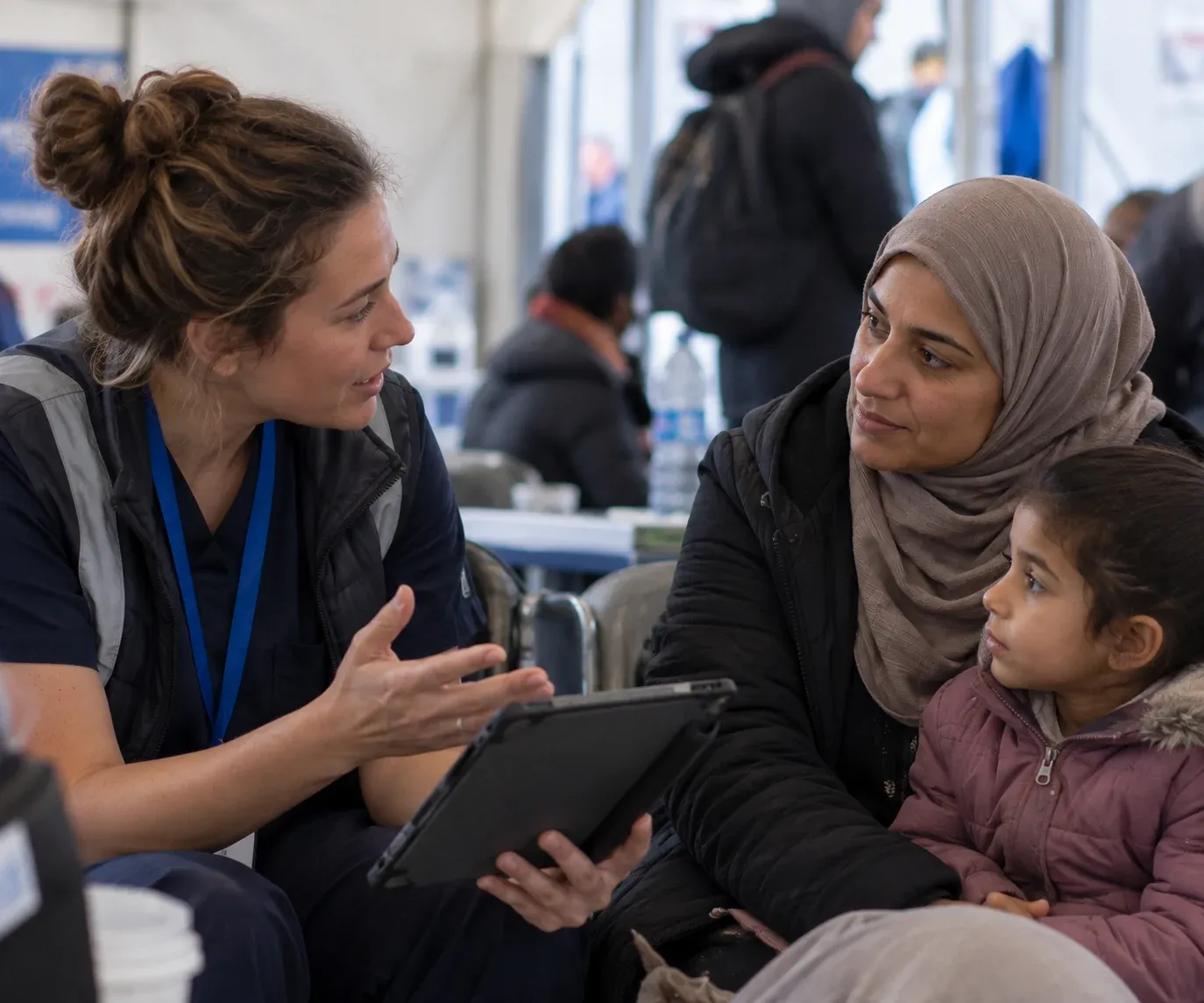
More than 30% of the world’s population lives with a communication challenge. In lower-middle-income countries, language barriers combined with limited access to healthcare change patient outcomes outright.
The Foundation is our health-accessibility programme: providing CardMedic to refugee camps, disaster zones and humanitarian responders, aligned to WHO global health policy and the UN Sustainable Development Goals.
Clinical backing, evaluation and recognition
Programmes, funding, mentorship and coverage are different things. Each is described precisely, and we can share the evidence for any of them on request.
-
 Programme NHS Innovation Accelerator Listed in the NHS Innovation Accelerator innovation directory.
 -
 Programme NHS Clinical Entrepreneur Programme Our clinical founder is an alumna of the NHS Clinical Entrepreneur Programme, and has mentored other clinical and non-clinical founders.
 -
 Funding and evaluation SBRI Healthcare Funded evaluation support and a published impact case study. SBRI Healthcare is funded by NHS England in partnership with the Health Innovation Network – this is funding and evaluation support, not clinical endorsement.
 -
 Award won Digital Health Rewired Pitchfest Pitchfest winner, as reported by Chelsea and Westminster NHS Foundation Trust innovation charity, CW+.
 -
 Grant funding Innovate UK Grant funding awarded to develop and evaluate the platform in NHS services, alongside SBRI Healthcare funding.
 -
 Export support Department for Business & Trade CardMedic is part of the Department for Business & Trade Digital Health Export Offer Playbook, with an export success story published: CardMedic has been accessed in 163 markets.
 -
 US innovation support Texas Medical Center Supported by the Texas Medical Center innovation landscape, which also published a founder Q&A.
 -
 US innovation support Mayo Clinic Innovation Exchange Supported through the Mayo Clinic Innovation Exchange as part of our US expansion.
We would rather come to you
Our best conversations do not happen on a video call. They happen on your site – walking the wards, standing in a triage bay at handover, sitting in a community team office while someone shows us the workaround they invented because nothing else worked.
That is how CardMedic gets better: floor-walking, watching real conversations, listening to the midwife, the receptionist and the healthcare assistant as closely as the executive sponsor. It is in our DNA, and it is why our clinicians are still clinicians.
So invite us in. Show us the interaction that keeps going wrong. We will show you what we have built and what we have measured, and we will be straight with you about what we have not solved yet.