

Platform
One clinical communication workspace.
Three things you need in the next few minutes: fast access on any device, the right words in a format your patient understands, and a human interpreter when the conversation needs it.
Four moments, one workflow
This is the whole thing, in the order it happens at the bedside. Simulated screens – no patient data.
- 01
Say what the conversation is about
Plain language in, clinically assured content out. No menu tree to learn on a night shift.
- 02
Match the format to the person
Language is one barrier. Literacy, cognition, hearing and sight need a different format, not a louder voice.
- 03
Turn it into a conversation
Two-way translation inside a governed workflow, with its limits visible and the interpreter route one tap away wherever your organisation has it enabled.
- 04
Reach a human when it matters
Consent, safeguarding, bad news and complex conversations are situations where professional interpreting should be used. Access to an interpreter is available through the relevant pathway when needed.
We are not a consent system. We help staff and patients understand each other so consent can be given properly – and we work with Concentric Health, whose product does the consent itself.
And it comes back round
What was used, what was escalated and what staff told us afterwards feeds governance – and shows up in the next version of the content.
That is the difference between a library that ages and a library that learns.
What changes on the floor
Pick a setting. These are the conversations teams tell us about.
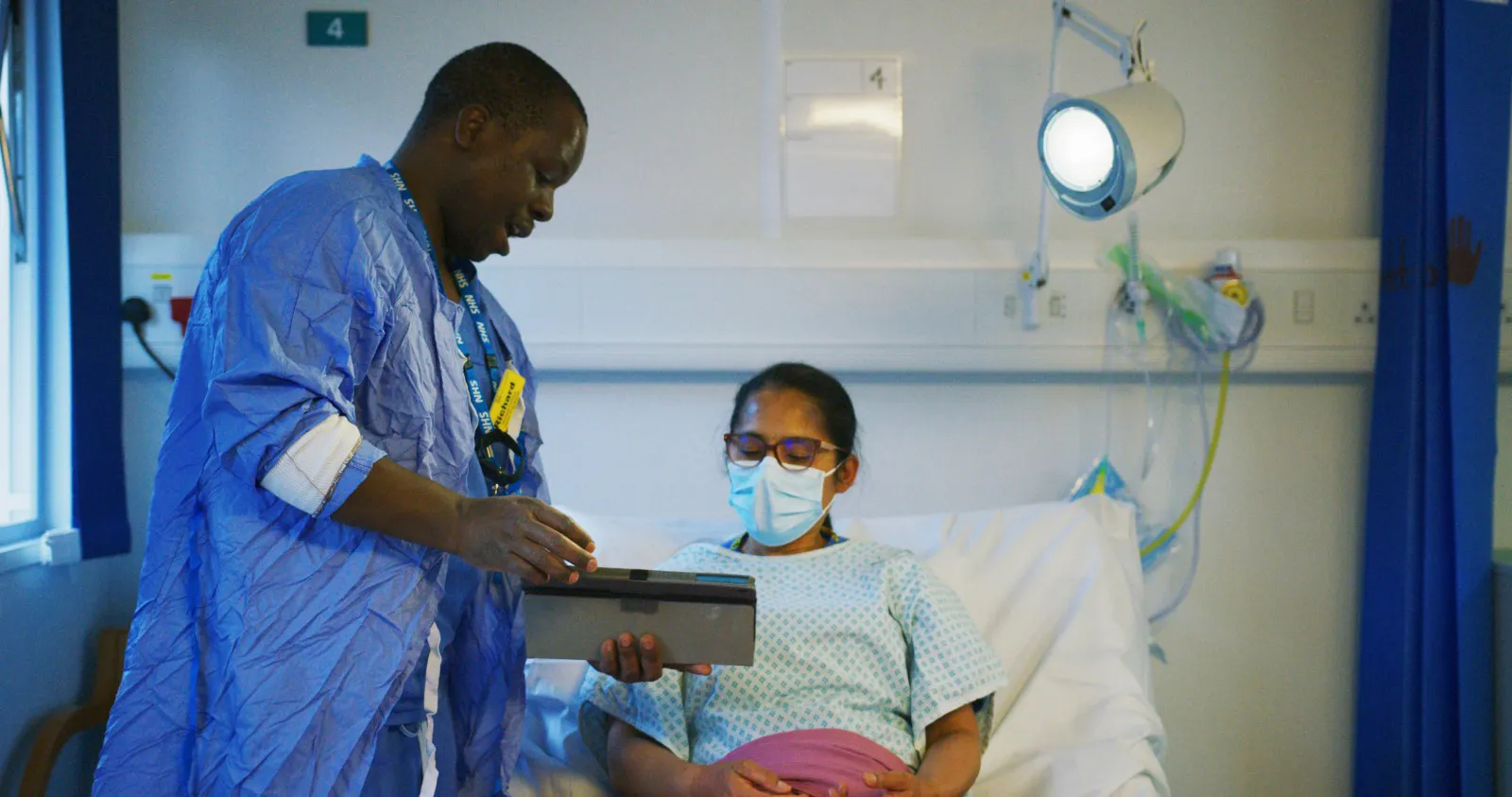
Triage, no notes, no known language
A man arrives in pain and cannot tell you where.
- Without a communication layer Assessment starts in gestures. Someone goes to find a phone number for interpreting while the queue builds behind him.
- With CardMedic Staff pick his language on the device in their hand, work through governed triage questions, then bring an interpreter onto the call for consent.
Minutes, not the wait for a booking. And a record of what was used.
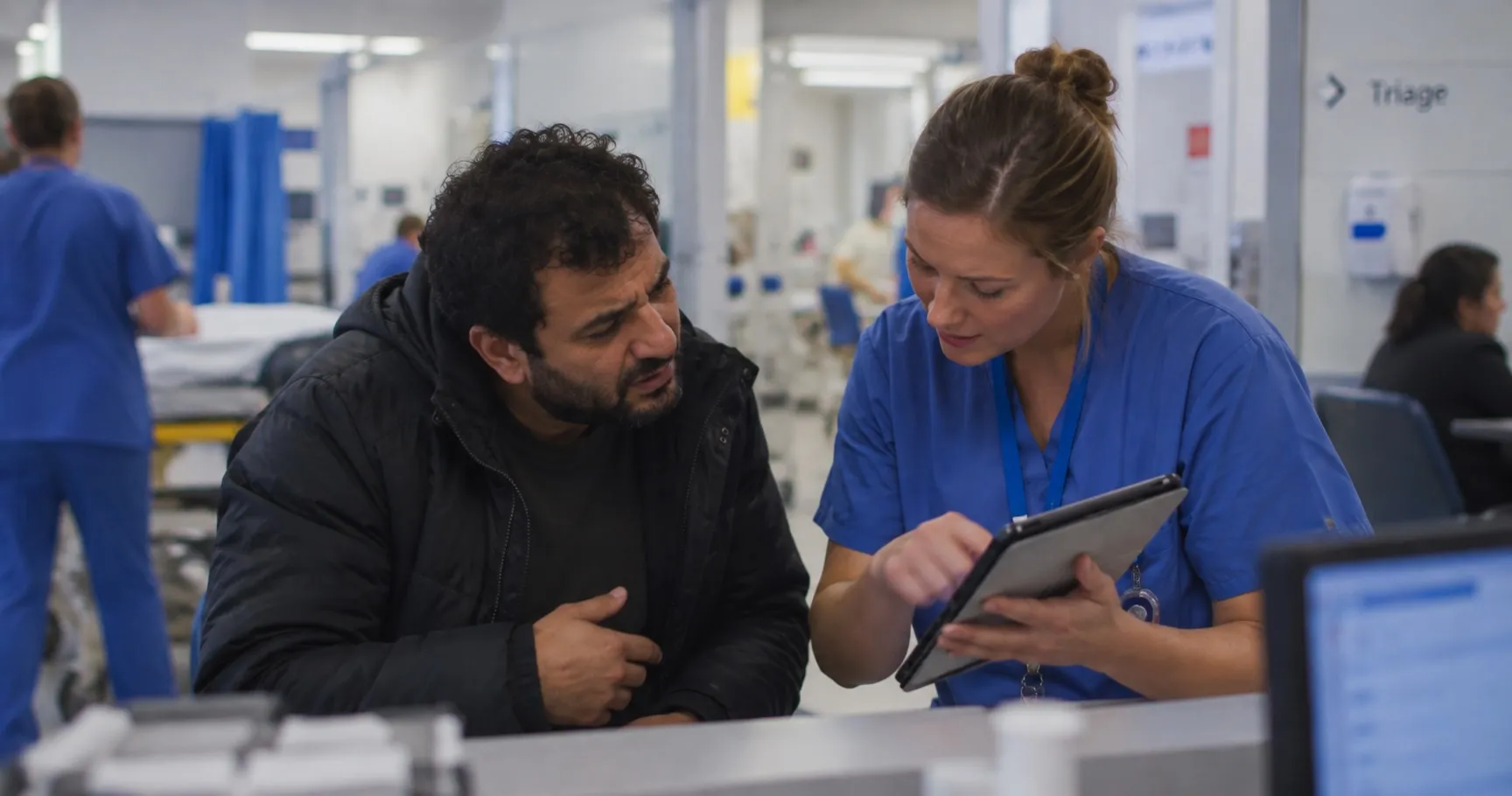
Delivery suite, time-critical
A woman in advanced labour, with little English.
- Without a communication layer Explanations get shortened. Consent is taken on trust. Distress rises because nobody can say what is happening next.
- With CardMedic The midwife uses prepared maternity content in her language, switches to Live Translate for her questions, and escalates to an interpreter when decisions matter.
She knows what is happening. So does her partner.
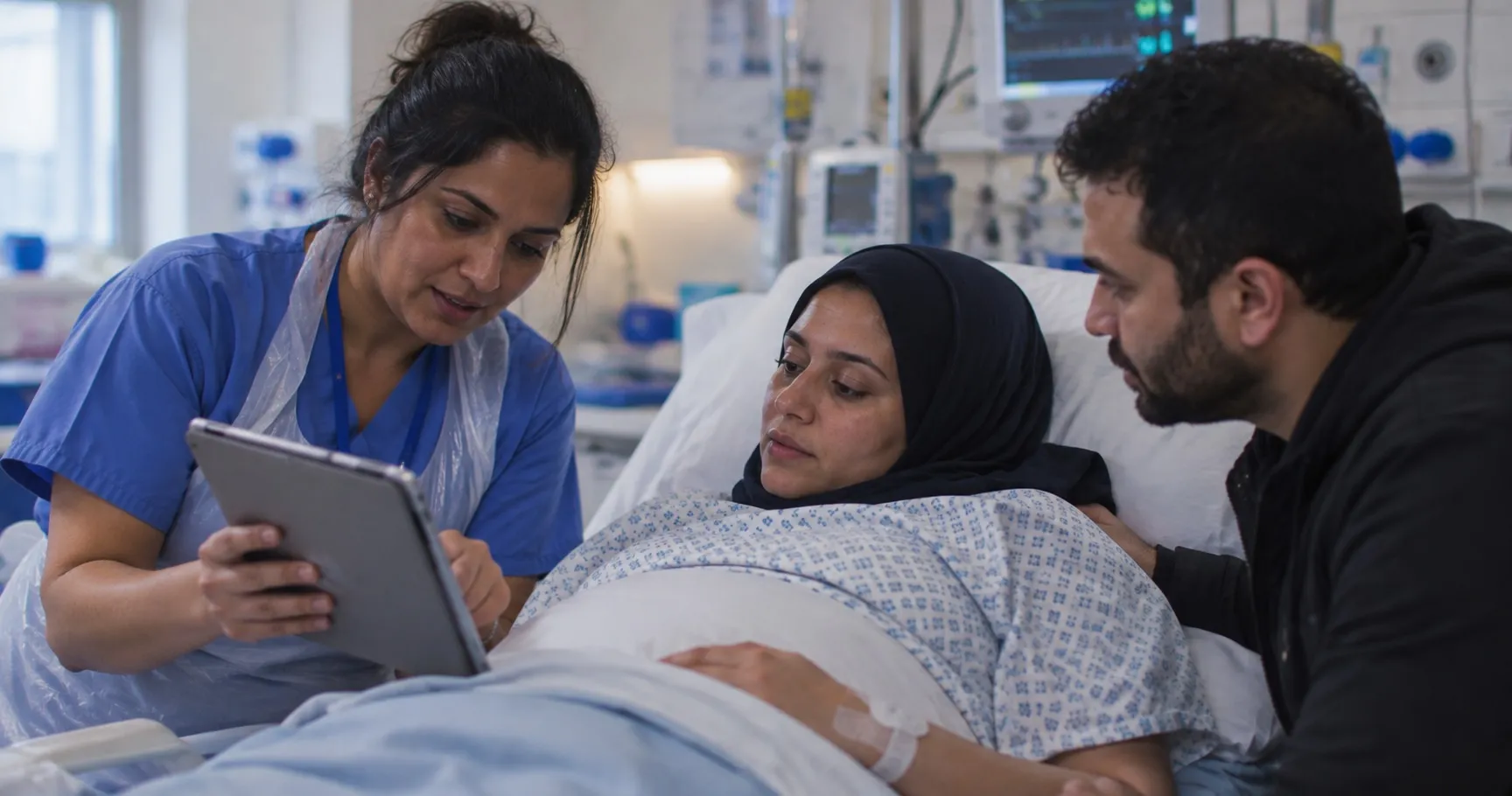
Community nursing, offline
A first home visit, three floors up, no signal.
- Without a communication layer The visit is spent guessing, or rebooked with an interpreter, a week later.
- With CardMedic Approved content is already on the device offline, in Easy Read where reading is hard, read aloud where sight is limited.
The visit does its job the first time.
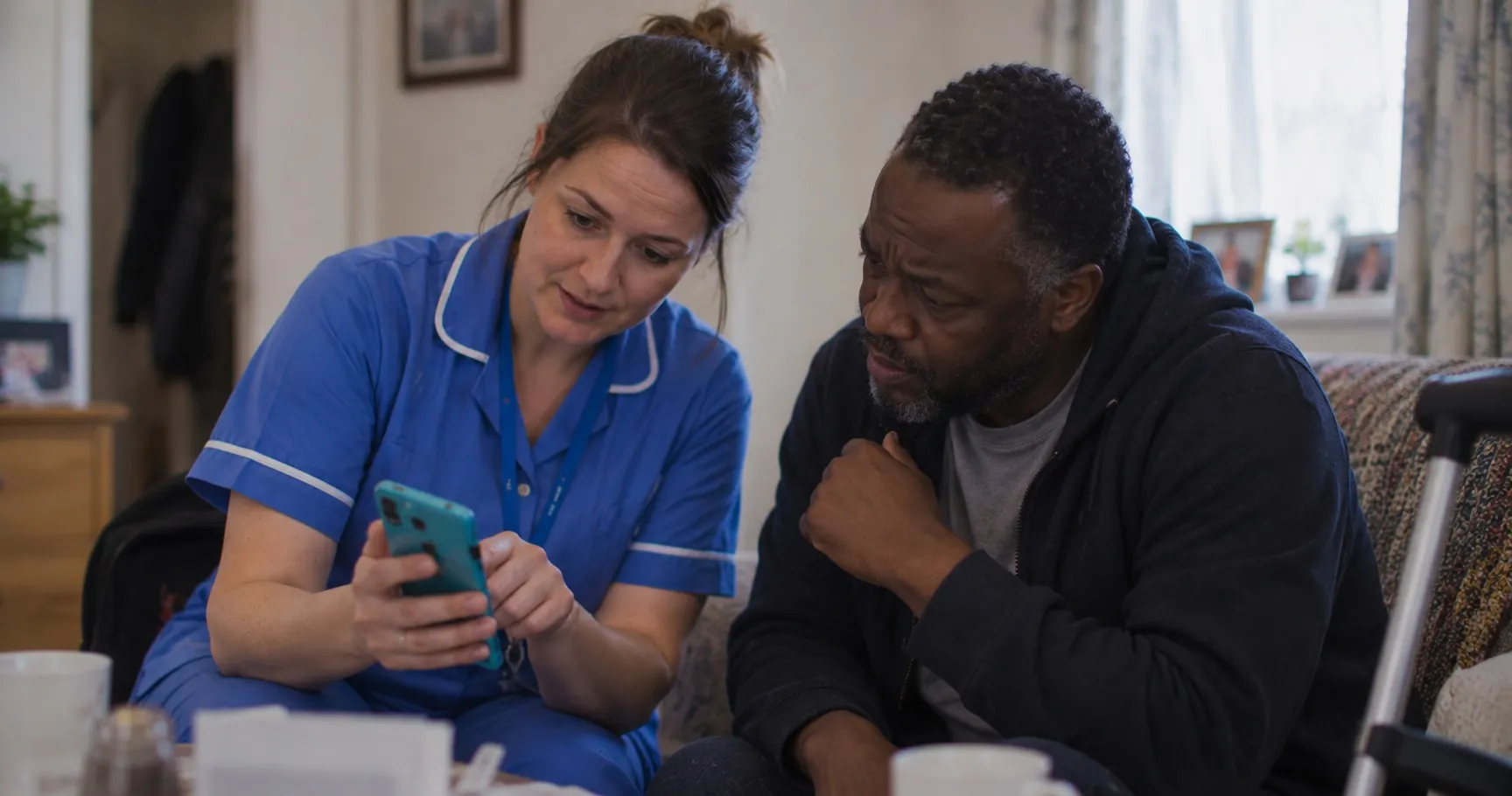
Ward discharge, high readmission risk
Going home with instructions nobody understood.
- Without a communication layer Written advice in English goes into a bag. The next contact is a readmission.
- With CardMedic Discharge advice is given in the patient’s language and in Easy Read, read aloud, and repeated back before they leave.
The conversation that prevents the next admission.
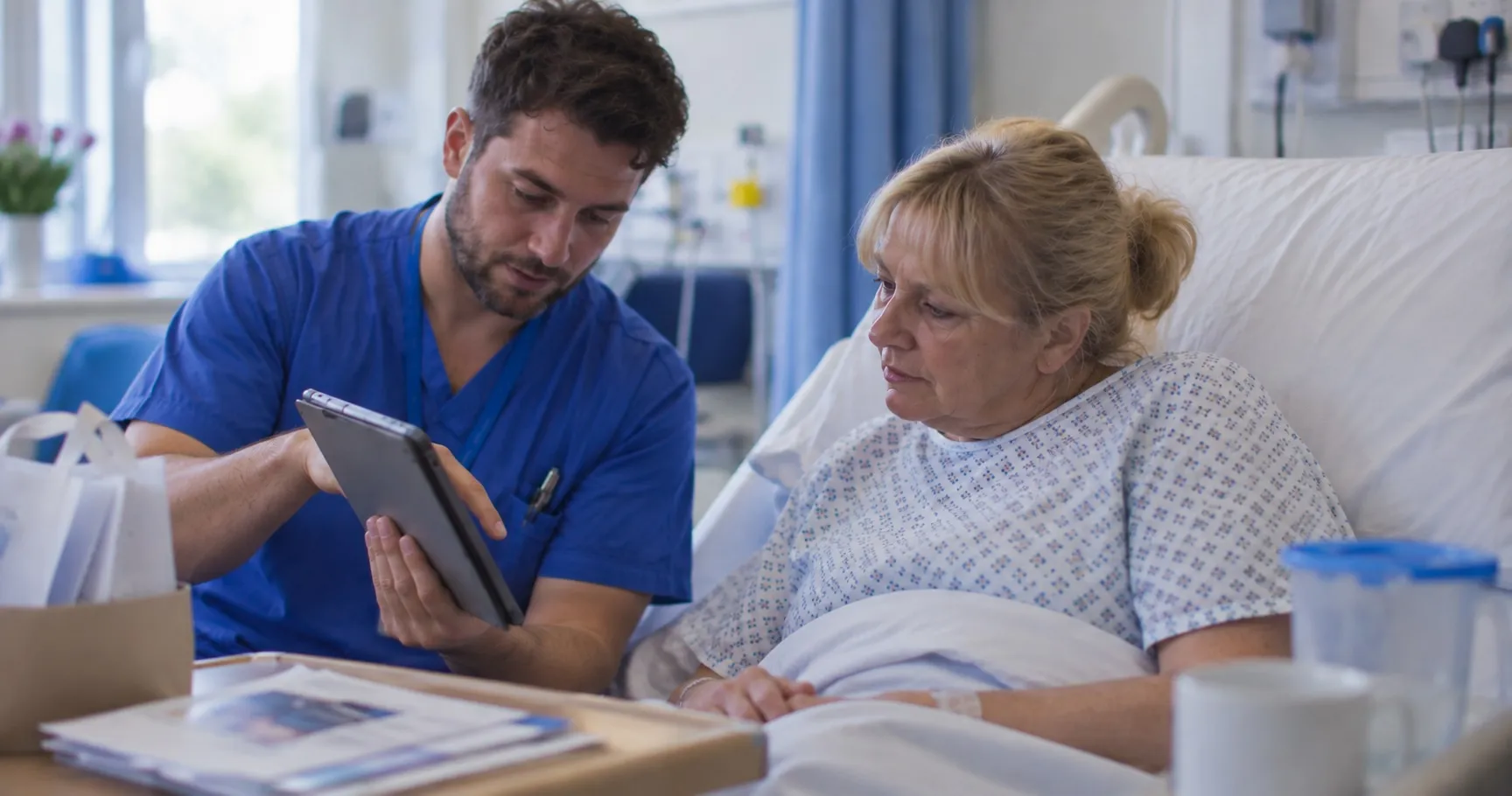
Find the right words, fast
Search-first access to clinically authored conversations and patient information, on the device already in a clinician’s hand.
-
Search across every approved interaction
availableStaff type what the conversation is about; results span communication cards and patient information.
-
Favourites and organisation-specific content
availableLocal pathways, local wording, governed by the organisation.
-
Offline access
limited releaseApproved content is available offline on supported platforms; the platform matrix is confirmed during implementation.
Adapt to the person in front of you
Language is one barrier. Literacy, cognition, hearing and vision are others, and they need different formats rather than louder speech.
-
Easy Read, Read Aloud, British Sign Language and American Sign Language
availableAccessible formats produced and reviewed as part of the same governed content system. BSL for UK services, ASL for US health systems.
-
Live Translate
availableTwo-way live medical translation inside a governed workflow, with visible limits and an explicit route to a professional interpreter. Clinically assured translation in 45 languages sits alongside it.
-
Display and reading preferences
availableType size, contrast and display settings that persist for the person using the device.
Reach a human, and show what happened
Professional interpreters remain essential. CardMedic makes them easier to reach, and makes the whole pathway visible for the first time.
-
Telephone and video interpreter access
availableConnects to the organisation’s approved provider from the same workflow. Named integrations are listed only once verified.
-
Multi-provider routing
commissioned configurationRouting across more than one approved provider using organisation-defined criteria, where commissioned and configured.
-
Adoption and escalation insight
availableAggregate, privacy-preserving reporting on need, adoption, modality and escalation. Your organisation gets the full dataset, exportable, not a curated dashboard.
Where we stand on AI
Machine translation is now everywhere in this market, and we use it – openly, and inside a clinical assurance process. Here is where it sits, where a human sits, and what we are not going to build.
-
What we use it for
Live Translate: unscripted, two-way conversation where speed matters and the stakes allow it. It is included in the licence. We do not charge by the minute for it, and we do not intend to.
Where interpreter connection is not enabled, the workflow still flags the conversations that need one. What that means in practice.
-
How prepared content is assured
Every card starts from a clinically authored or clinically verified source. Translation into the curated library runs through a controlled process combining linguistic expertise, approved terminology, technology-assisted analysis and targeted human and clinical review, weighted to the clinical consequence of an error. Each item must pass through this defined assurance process before entering the curated library.
Consent, safeguarding, bad news and complex conversations are situations where professional interpreting should be used. CardMedic provides clear signposting to professional interpreting where the conversation, local policy or clinical judgement makes that appropriate. CardMedic supports the decision; it does not make the clinical decision. How the assurance model works.
-
What we are not building
We do not call any software an interpreter, including ours – interpreting is a profession with standards attached to the word. And we are not building our own speech engine to compete with the big models, so you are not paying for one.
Raw translation is not the hard part. Knowing which route a conversation needs, assuring what the patient actually reads, and being straight about the limits of each route – that is the work.
General-purpose models keep getting better and cheaper, and you should get the benefit of that rather than pay anyone to rebuild it. What does not get cheaper is clinically authored source content, translation assured to a healthcare standard, the governance around every route, and choosing the route on what the patient needs rather than on what the contract bills for. That is what we do, in the platform and in the material we translate for you.
Integration, so you keep the providers you approve
Open integration reduces implementation friction and lets an organisation retain its approved interpreting providers rather than adopting ours.
-
Interpreting providers
Connect the telephone and video providers an organisation already approves, and more than one where language, setting or availability differ.
-
Healthcare technology partners
Surface CardMedic inside bedside platforms, digital front doors and patient-engagement workflows.
-
EHR-adjacent workflows
Sit alongside the clinical record without becoming a second place to document care.
-
Identity and devices
SSO with your work accounts, on approved phones, tablets and desktops.
API schemas, architecture and credentials are shared under agreement, not published.
Sustained change starts at the bedside
Software alone does not change a conversation. Implementation, floor-walking, training, feedback and benefits tracking are part of the service – alongside patients, families, carers, reception teams and clinicians.
- Baseline the pathway with the teams who will use it
- Floor-walking and short, practical training in situ
- Feedback routes for staff, patients and carers
- Benefits tracking against the baseline you agreed
How a request finds the right route.
The organisation defines the approved options and routing policy. CardMedic applies them and reports what happened.
Patient need, in a care context
CardMedic communication layer
Applies your organisation’s approved options and routing policy.
- Governed content
- Accessible formats
- Live Translate
- Approved provider A
- Approved provider B
Access, adoption and benefits evidence – back to you
Text equivalent: a patient need and its care context enter the CardMedic communication layer. Based on the organisation’s approved rules, the layer offers governed content, accessible formats, Live Translate or a professional interpreter from an approved provider. Every route reports into aggregate access and benefits insight. Routing rules and configuration logic are not published.